Planning to worldschool in Vietnam? One of the first questions every family asks is: what does it actually cost to live in Hội An? Not the Instagram version — the real one.
Rent, groceries, getting around, keeping the kids busy. We've been here long enough to give you the honest numbers, and this is our actual family budget for 2026, broken down in both VND and GBP.
As of 2026, our goal as a family of four is to get by on roughly £28 (1,000,000 VND) per day for everything but rent. Obviously, day-to-day spending varies family to family depending on individual situations — but here's how it breaks down for us.
Rent in Hội An: what families actually pay
Rent in Hội An is, broadly speaking, around a quarter of what you'd pay in the UK for a comparable property. We currently rent a two-bedroom house with an open-plan downstairs, a small pool and a generous roof terrace for 15,000,000 VND per month (£421), not including electricity (which last month came to 1,361,000 VND / £38). Water, interestingly, is free — our landlord pumps up groundwater and runs it through a disinfecting filter. We use it for washing and bathing; drinking water comes from bottles.
Within the expat and worldschooling community here in Hội An, rental prices vary dramatically — mainly due to a combination of landlord and agent opportunism on one side, and a lack of research on the part of new arrivals on the other. This matters, and how you feel about it probably depends on your broader views on travel and whether it's possible to live somewhere as a westerner without negatively affecting the local economy over time.
The uncomfortable reality is this: if large numbers of British, American and Australian families flock to an area and routinely pay two or three times what locals do — simply because, on a western wage, they can — it might provide a short-term injection into the local economy, but over the long term it pushes house prices up to the point where local people can no longer afford them. It's the second-home dynamic playing out in places like Cornwall and Devon, scaled outward into something that sits uncomfortably close to twenty-first century colonialism — or, at the very least, imperialism.
To give you a sense of scale: the average monthly income for a local person in Vietnam is 8,000,000 VND (£225), though this varies by region, with rural incomes typically lower than in cities.
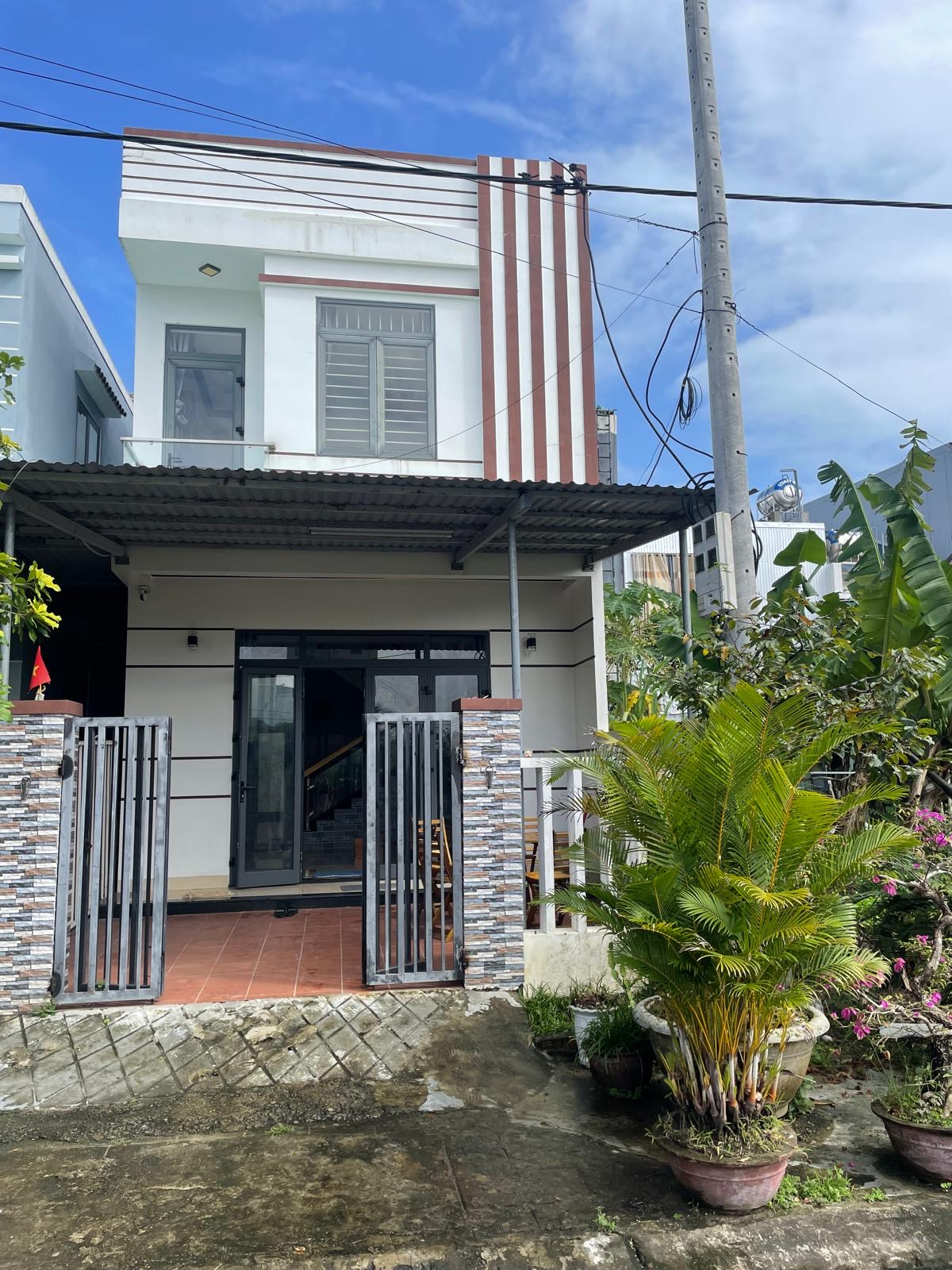
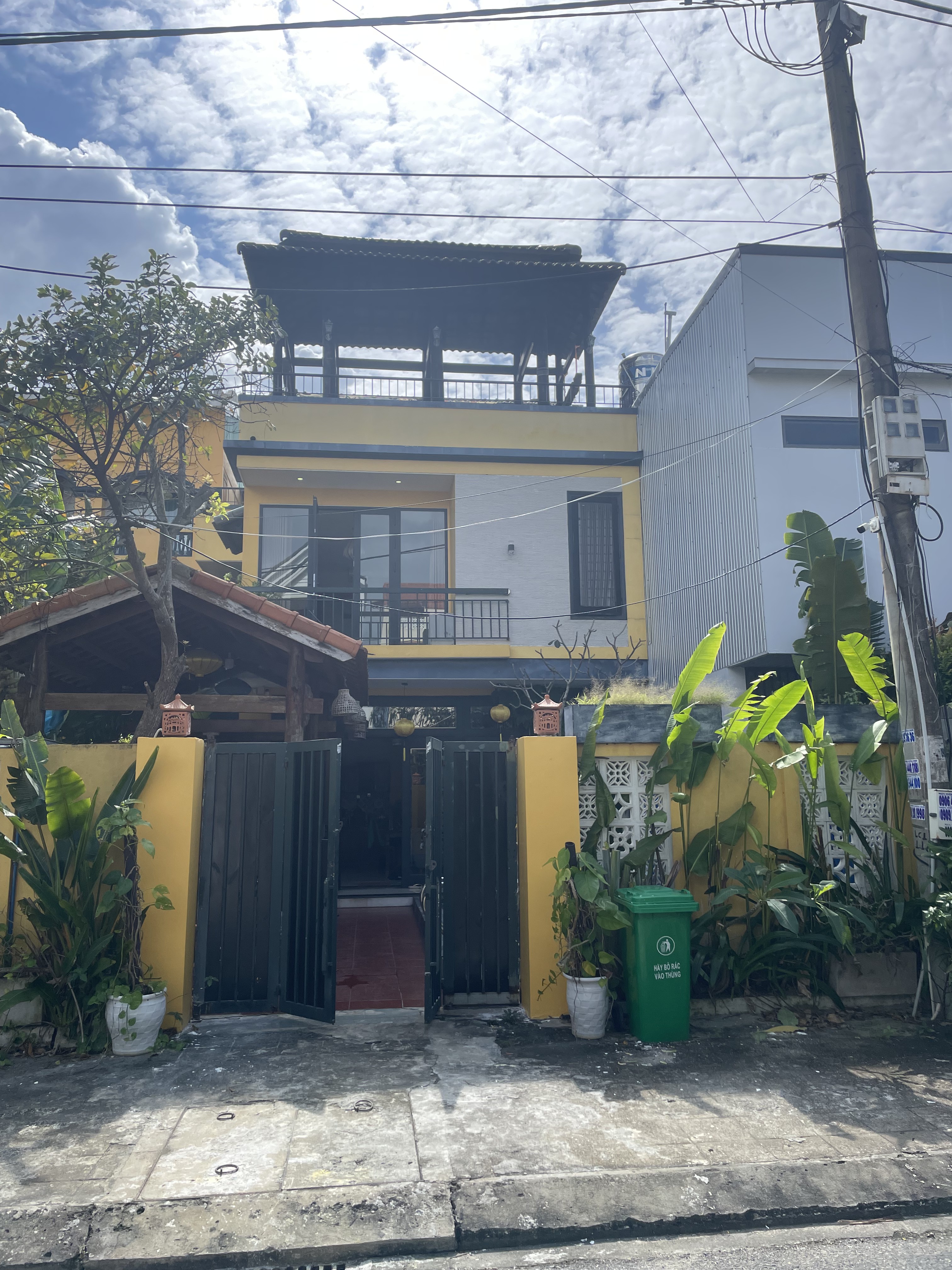
A lot of families in the worldschooling community pay upwards of 25 million VND (£702) per month, with 30–35 million VND (£845–£983) not being unusual at all. We know of people paying 50 and 60 million VND (£1,405–£1,685). My own view is two-fold: first, why come halfway around the world to pay what you'd pay back home, even if you're getting three or four times the house? We briefly tried it — see the previous entry on The Rat House — and while there were external reasons we left, we also quickly realised we'd let ourselves get swept up in the excitement of a six-bedroom monster complete with a large pool and roof terrace for 25 million VND, when we simply didn't need any of it. Unless you have a small army of children, why pay for empty bedrooms every month?
Second: there has to be a balance. As visitors and outsiders, we shouldn't expect to pay exactly what the locals pay, but we do need to stay aware of the danger of renting these 'castles' and effectively sealing ourselves off from the community we've chosen to live in. Being able to say hello and thank you in Vietnamese, while only interacting with locals as they serve you, doesn't count as integration.
Landlords and agents have quickly worked out that there will always be westerners happy to pay almost any monthly rental they're asked for. Or they can try the Airbnb route — a property that sits empty seven or eight months of the year but makes a killing during peak season. In my view, this collision between the very greedy (understandable from a local perspective) and the very lazy (less so — no attempt to research local pricing, just a quick look-and-book) is the core problem. There is a middle ground, but finding it takes more effort from the westerner's side: knocking on doors, making connections, some polite bargaining.
Hội An rental price guide (2026)
- 1-bedroom apartment (city centre): 9–11 million VND (£251–£307)
- 1-bedroom (outside city centre): 5–9 million VND (£139–£251)
- 2–3-bedroom houses and villas: 10–25 million VND (£279–£698)
- 4+ bedroom houses and villas: 20–40 million VND (£558–£1,118)
Bear in mind that anywhere in the Old Town or the An Bang Beach area will be significantly more expensive. And the single most important thing to remember: everything is negotiable, if approached realistically and respectfully. Agents are looking out for their cut — they can often be bypassed with a more personal approach of knocking on doors, talking to people, exchanging details.
Food costs: eating well on a budget
Food is, in some ways, easier to quantify — or at least less opinion-heavy. The main thing you quickly discover in Hội An is the stark contrast between places built and marketed for western visitors, and the places where locals actually eat.
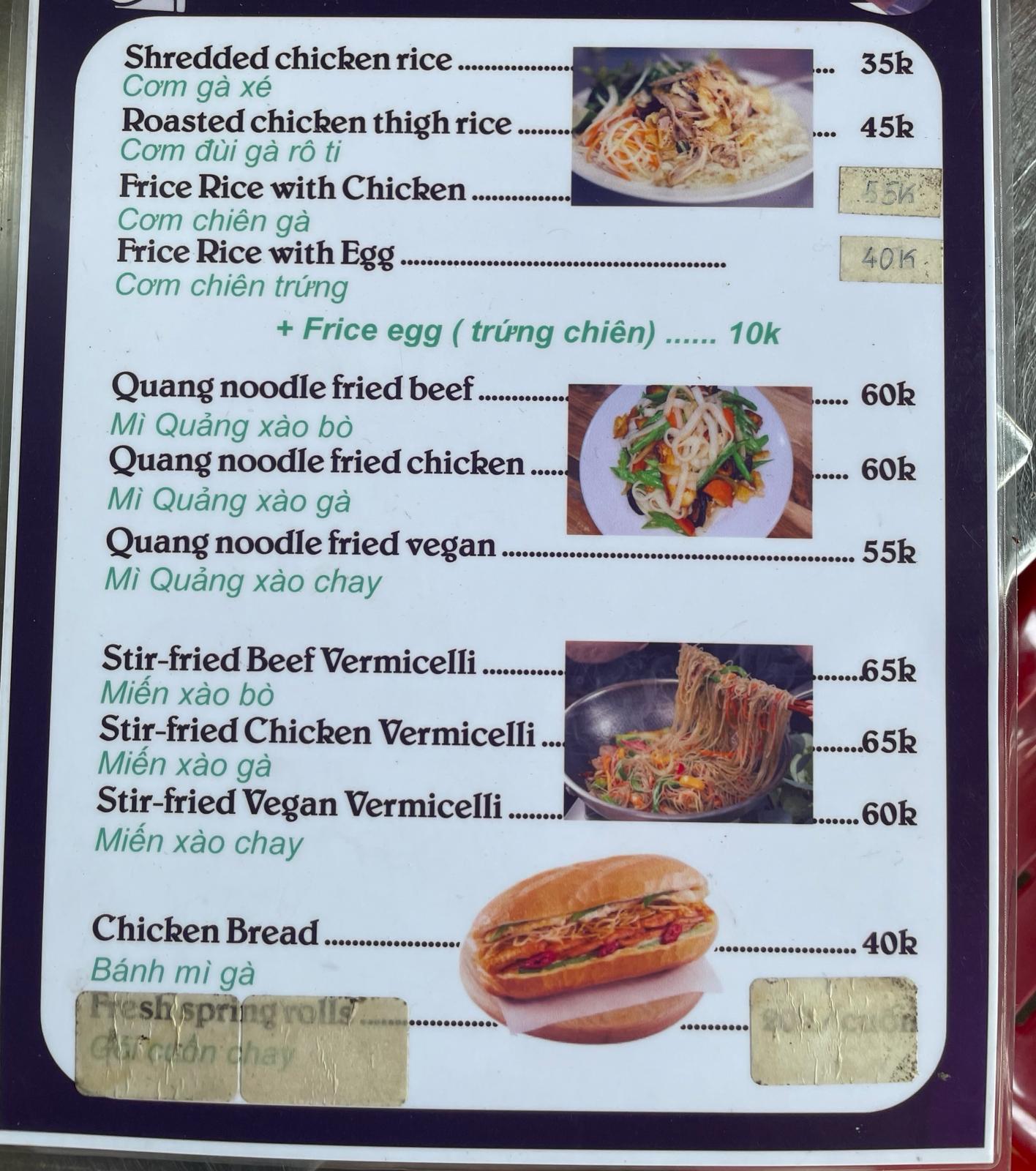
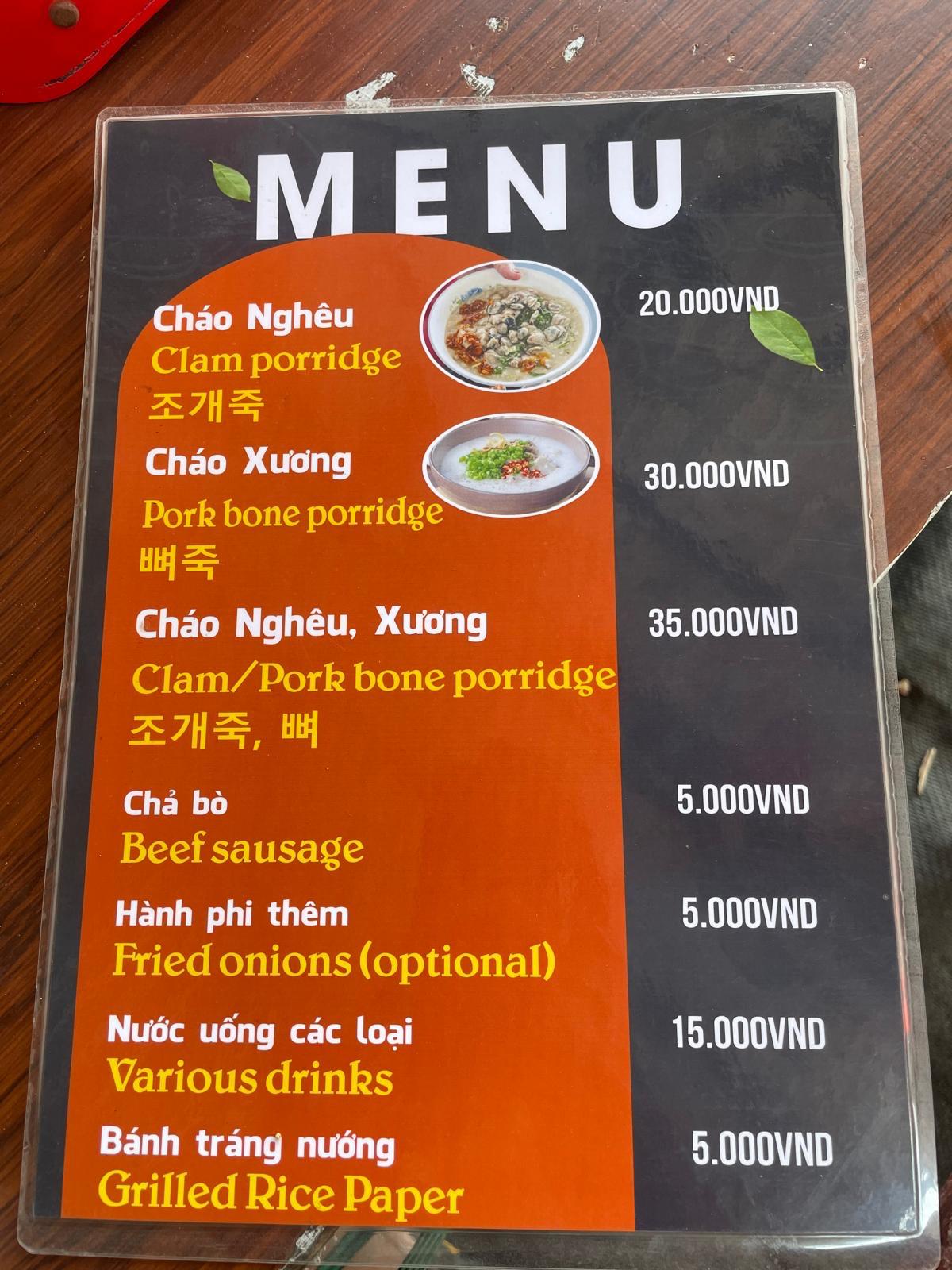
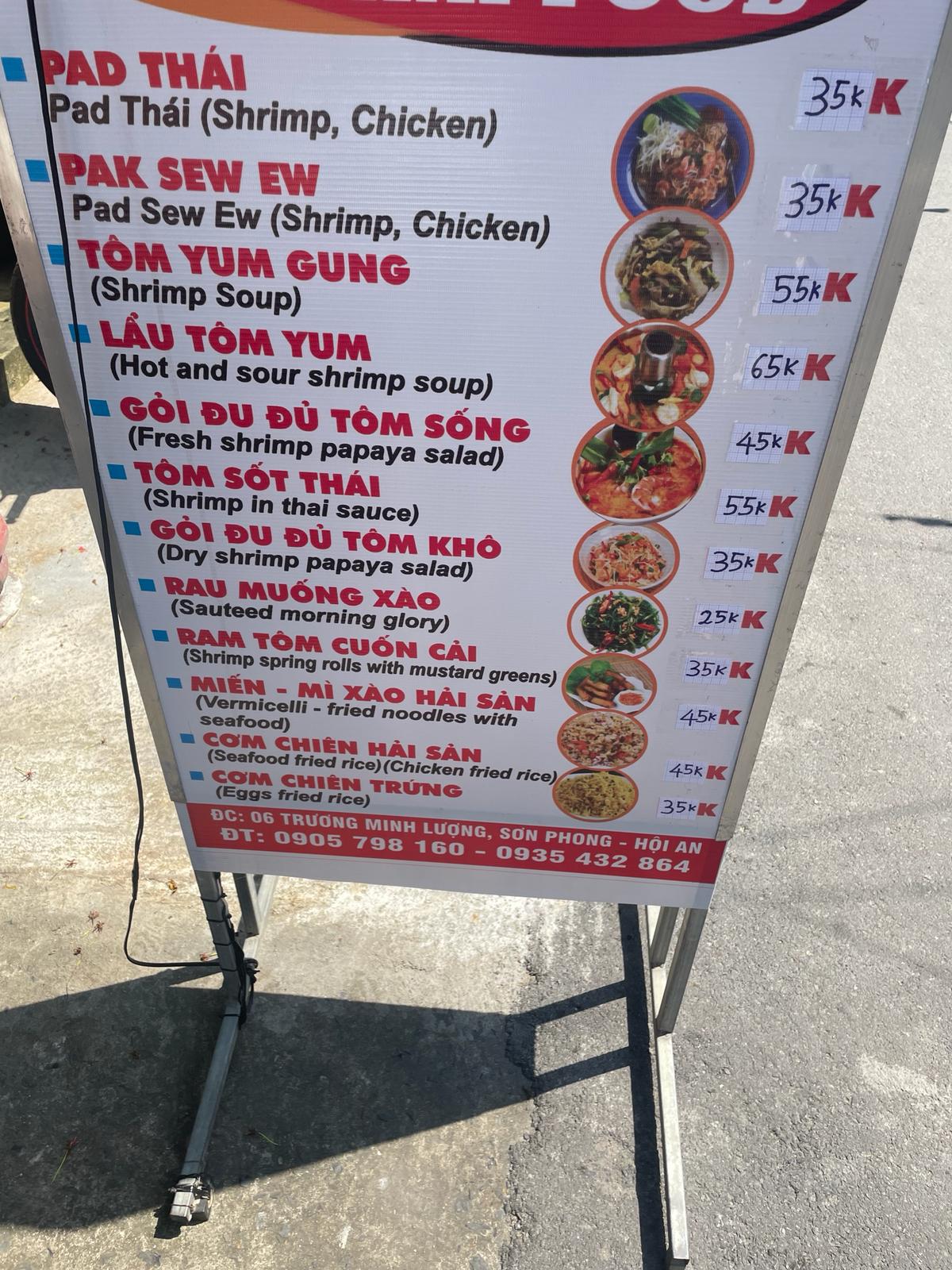
At a tourist-facing restaurant, you can easily pay around 100,000 VND (£2.80) for a basic rice dish — chicken fried rice, say — which is, admittedly, still pretty good value by UK standards. But head to Ba Le market, brave the scooters weaving through the narrow pathways, settle yourself onto one of the tiny plastic chairs, and you can find the same dish for half the price or less. Traditional local food is almost always better value than tourist fare, and almost always better quality too. The western-style offerings — pizza, burgers, chips — are usually outsourced anyway. We lived on the same road as a man who ran a pizza oven from just outside his house; we'd regularly see him scootering along with a large square metal box dangling from the handlebars, delivering to restaurants that would serve it as their own.
It's also worth noting something that runs counter to conventional wisdom: in Hội An, it is generally cheaper to eat out than to cook at home. As a family, we tend to eat plenty of pasta (like most young children, E and e are formed of 90% penne), lentils, chickpeas and red kidney beans — good, varied food that the kids are actually happy with (and yes, I'm feeling very smug about that, thank you very much). But because these items aren't traditionally available here, they're imported, and the prices reflect that. A tin of lentils or baked beans regularly costs over £1. Dried pasta and jarred sauces are similarly frustrating in price.
Instead, we've fallen into a routine of sourcing the components of our breakfasts locally. We buy eggs from the market (10 for 25,000 VND / £0.70) and freshly baked banh mi breads from a local place — 10 for 35,000 VND (£0.98), usually still warm when we pick them up. The place itself is almost impossible to spot from the outside; you'd never guess there were industrial ovens and a full baking operation producing hundreds of loaves every day. We've also found a watermelon spot just outside the market where a very large one costs around 50,000 VND (£1.40) depending on weight.
Food price guide: Hội An 2026
- Banh mi (chicken/pork/egg): 15,000–40,000 VND (£0.42–£1.12) from local vendors; restaurants will charge more
- Coffee: Vietnam is the second-largest coffee exporter in the world, and the variety is extraordinary — salted, coconut, egg (yes, egg). From local vendors (sometimes literally selling from their front room), average price is around 35,000 VND (£0.98)
- Rice dishes: egg-fried or chicken-fried rice at markets like Ba Le: 40,000–55,000 VND (£1.12–£1.54)
- Noodle dishes: beef pho (noodle soup with thinly sliced beef, fresh herbs, chilli, lime, ginger and onion) and cao lau (noodles with marinated pork, bean sprouts, fresh herbs and crunchy fried noodles) from around 30,000 VND (£0.84)
As a family of four, the lion's share of our daily £28 budget goes on food and drinks.
Getting around: transport costs
Grab and inDrive
Like much of Southeast Asia — Thailand, Malaysia, Cambodia — Vietnam uses the Grab app for taxis and food delivery. A standard car typically costs between 35,000–95,000 VND (£0.98–£2.65) for a five-to-twelve minute trip. Grab bikes are cheaper still at 15,000–25,000 VND (£0.42–£0.70), and there's something genuinely fun about sitting on the back of a scooter as the driver navigates the narrow lanes through the rice paddies or the controlled chaos of the Old Town.
There's also inDrive, which generally works out cheaper than Grab (except, oddly, for scooters). Rather than a fixed price, you enter your pickup and destination, and drivers bid for your booking. It's a bit ethically ambiguous — it's essentially a race to the bottom for drivers already handing 20–30% to the app — but it's useful to have an alternative when Grab throws up an unusually high price. Even then, we're talking about a pound or two difference.
Renting a scooter
If you're staying longer or just want more independence, renting a scooter is absolutely worth considering. We initially rented ours from someone in An Bang for 1.5 million VND per month (£42), but have since switched to a contact in Da Nang who delivers the bike and charges only 1.1 million VND (£31).
Other monthly costs worth knowing
- Phones: we kept our UK SIMs but switched to pay-as-you-go — living like it's 2005 — paying just £10 every six months. Two of us bought local six-month SIMs for 810,000 VND each (£23).
- Activities: I've recently got deep into pickleball — a racket sport that originated in the US but has exploded across China, Malaysia and Vietnam in recent years. There are at least three courts within a couple of miles of us, and our main spot charges 120,000 VND per hour (£3.35). Since it's such a social sport, splitting the court costs with a partner — or quartering them in doubles — means even playing most days barely registers in the daily budget.
- Swimming pools: a lot of hotels will happily allow non-guests to use their pools, as long as you buy a drink and are polite and respectful about it.
- Pool halls: one has recently opened near us charging 40,000 VND per hour (£1.12), with half-hour sessions welcome too.
The bottom line: is Hội An affordable?
The short answer is yes — significantly more so than the UK — but the actual cost of living in Hội An in 2026 depends enormously on the choices you make, particularly around accommodation. Approach it with some patience and genuine curiosity, and you can live extremely well for a fraction of what you'd spend at home. Approach it like a tourist with a western salary and unlimited time, and you'll find ways to spend just as much.
is to find the balance.
— J ✻